
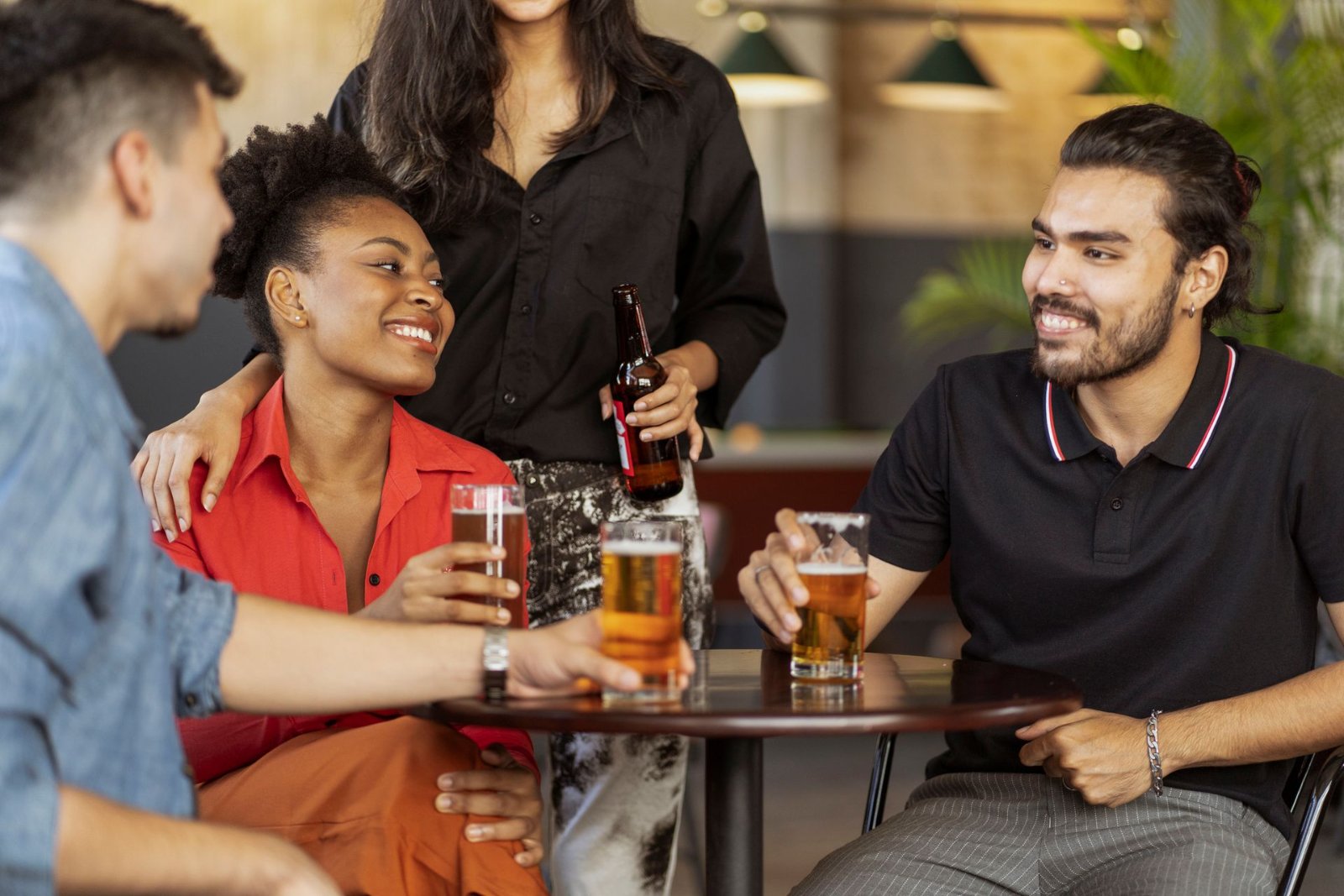
If you’ve ever found yourself canceling plans last minute, scrolling through your phone alone on a Friday night, or feeling that familiar knot in your stomach before walking into a crowded room, you’re not alone. Social anxiety affects millions of Americans, and in a bustling city like Sacramento, CA, it can feel especially isolating when you see others thriving in social settings while you struggle to find your footing. But what if the answer to building genuine mental resilience wasn’t found in a therapist’s waiting room or a solo meditation app — but rather in the lively, laughter-filled streets of Midtown Sacramento on a bar crawl night?
This might sound counterintuitive. After all, aren’t we told that quiet, solo activities like journaling, hiking, or reading are the gold standard for mental wellness? While those activities certainly have their place, emerging research and real-world experience suggest that structured social activities — particularly organized bar crawls — offer something uniquely powerful for building mental strength and dismantling the walls of social anxiety.
In this article, we’re going to dive deep into the psychology behind social exposure, the science of resilience building, and why Sacramento’s vibrant bar crawl scene — especially through organized experiences like those offered by Barcrawlerz — might just be the mental health tool you never knew you needed.
Understanding Social Anxiety: More Common Than You Think
Before we explore the solution, let’s understand the problem. Social anxiety disorder is one of the most prevalent mental health conditions in the United States, affecting approximately 15 million adults. But beyond the clinical diagnosis, countless more people experience subclinical social anxiety — that uncomfortable, sometimes paralyzing nervousness that shows up before social events, during conversations with strangers, or when entering unfamiliar social environments.
Social anxiety isn’t just shyness. It’s a complex interplay of fear of judgment, hyperawareness of social cues, anticipatory dread, and the physical symptoms that come with it — racing heart, sweaty palms, a mind that goes completely blank when you need it most. Left unchecked, social anxiety tends to grow stronger over time, not weaker, because avoidance reinforces the fear.
“Avoidance is the fuel that keeps anxiety alive. The more we avoid the things that scare us, the more power we give them.” — A foundational principle of Cognitive Behavioral Therapy (CBT)
This is precisely why solo recreational activities, while valuable, often fall short when it comes to addressing the root cause of social anxiety. You can hike every trail in the Sierra Nevada foothills, read every self-help book on the market, or perfect your home yoga practice — but none of those activities will teach you how to walk up to a stranger, introduce yourself, and have a genuine conversation without your heart pounding out of your chest.
The Science Behind Social Exposure and Mental Resilience
What Is Mental Resilience, Really?
Mental resilience is often misunderstood as the ability to feel no stress or fear. In reality, resilience is about your capacity to encounter stress, discomfort, or adversity and recover from it — or even grow through it. Resilient people don’t avoid difficult situations; they develop the internal resources to navigate them effectively.
Resilience is built through a process psychologists call “stress inoculation” — small, manageable doses of challenge that gradually expand your comfort zone without overwhelming your system. Think of it like building a physical muscle: you don’t get stronger by sitting on the couch, and you don’t get socially resilient by staying home alone every weekend.
The Role of Social Connection in Brain Health
Neuroscience has given us remarkable insights into how social connection literally shapes the brain. When we engage in positive social interactions, our brains release a cocktail of feel-good neurochemicals: oxytocin (the bonding hormone), dopamine (the reward chemical), and serotonin (the mood stabilizer). These aren’t just pleasant side effects — they’re essential ingredients for long-term mental health.
Conversely, chronic social isolation has been linked to increased cortisol levels, heightened inflammation, accelerated cognitive decline, and a significantly elevated risk of depression and anxiety. A landmark study published in the journal PLOS Medicine found that social isolation carries health risks comparable to smoking 15 cigarettes a day. That’s a sobering statistic for anyone who regularly chooses Netflix over a night out.
Graduated Exposure: The Therapeutic Foundation of Bar Crawls
Here’s where bar crawls become genuinely fascinating from a psychological standpoint. One of the most evidence-based treatments for social anxiety is graduated exposure therapy — the systematic, step-by-step process of confronting feared social situations in a controlled, manageable way. Bar crawls, particularly well-organized ones, are essentially a real-world version of this therapeutic approach.
Consider the structure: you arrive with a group (immediate social safety net), you move through multiple venues (variety reduces fixation on any single uncomfortable moment), you engage with new people at each stop (repeated low-stakes social practice), and the casual, festive atmosphere naturally lowers the stakes of any individual interaction. It’s graduated exposure wrapped in a fun, memorable experience.
Why Bar Crawls Beat Solo Activities for Social Anxiety Recovery
The Limitation of Solo Recreational Activities
Let’s be fair to solo activities for a moment. Running along the American River Parkway in Sacramento, painting in your apartment, or spending Sunday morning at the Sacramento Farmers Market alone — these activities have genuine mental health benefits. They reduce stress, promote mindfulness, and give you valuable time for self-reflection. We’re not dismissing them.
But here’s the honest truth: solo activities don’t practice the specific skill of social interaction. They can make you feel calmer and more centered, which is wonderful — but they don’t give you reps at the thing that actually scares you. If you’re afraid of flying, meditation might reduce your baseline anxiety, but it won’t teach you to get on a plane. Similarly, if social situations are your challenge, solo activities can only take you so far.
The Unique Advantages of Organized Bar Crawls
Organized bar crawls offer several structural advantages that make them particularly effective for building social confidence and mental resilience:
Built-In Social Permission
One of the biggest barriers to social interaction is the feeling that approaching strangers is somehow inappropriate or awkward. Bar crawls dissolve this barrier entirely. Everyone present is there with the explicit understanding that meeting new people is the point. This shared social contract removes the ambiguity that fuels anxiety and gives you automatic permission to introduce yourself to anyone in the group.
Repeated Low-Stakes Practice
Moving through multiple venues in a single evening means you get multiple opportunities to practice social skills. Each new bar is a fresh start — a new conversation, a new group of people, a new chance to practice your opening line or your listening skills. If one interaction doesn’t go perfectly, you’re moving on to the next venue within the hour. The impermanence is liberating.
The Power of a Shared Experience
Shared experiences create instant bonds. When you’re navigating a fun, slightly chaotic evening with a group of people — finding your way to the next venue, cheering when someone wins a bar game, laughing about the overly enthusiastic bartender at stop number three — you create shared memories that accelerate social bonding in ways that ordinary one-on-one conversations rarely do.
Alcohol as a Social Lubricant (Used Responsibly)
We’d be remiss not to address the obvious: alcohol, in moderate amounts, has a well-documented anxiolytic effect. It reduces the activity of the amygdala — the brain’s fear center — and lowers social inhibition. For someone with social anxiety, this can be genuinely helpful in the short term, providing a small window of reduced fear during which they can practice social skills they might otherwise avoid. The key, of course, is moderation — using the social environment as the primary tool, not the alcohol.
Sacramento’s Social Scene: A Perfect Backdrop for Building Confidence
Sacramento is uniquely positioned as a city for social growth. Unlike the often-intimidating bar scenes of Los Angeles or San Francisco, Sacramento maintains a genuine, approachable quality that makes social interaction feel more natural and less performative. The city’s Midtown neighborhood, with its walkable streets, diverse bar offerings, and friendly locals, creates an ideal environment for the kind of repeated social practice that builds real confidence.
From the craft cocktail bars on R Street to the lively dive bars near the Grid, Sacramento offers an enormous variety of social atmospheres. This variety is actually therapeutically significant — exposure to diverse social environments builds a more generalized social confidence than repeatedly visiting the same comfortable spot. Each new environment is a new opportunity to prove to your nervous system that you can handle the unknown.
The Sacramento Community Spirit
Sacramentans are known for their community-oriented, unpretentious attitude. This city has a strong culture of local pride and genuine friendliness that sets it apart from larger metropolitan areas. For someone working through social anxiety, this cultural warmth makes the stakes feel lower and the rewards feel more genuine. You’re more likely to have a real conversation with a stranger in Sacramento than in many other cities of comparable size.
The city also has a vibrant young professional community, a thriving arts scene, and a diverse population that makes for rich, varied social interactions. Whether you’re a transplant from the Bay Area, a Sacramento native, or a UC Davis grad who decided to stick around — there’s a place for you in this city’s social fabric, and bar crawls are one of the most accessible entry points.
How Barcrawlerz Makes the Experience Even More Effective
Not all bar crawls are created equal. The difference between showing up to a disorganized bar crawl and participating in a well-structured one organized by a company like Barcrawlerz is significant — especially when your goal is genuine social growth rather than just a night out.
Structure That Reduces Anxiety
One of the most anxiety-provoking aspects of social situations is uncertainty. Where are we going? Who will be there? What’s the plan? Organized bar crawls through Barcrawlerz eliminate much of this uncertainty. You know the route, you know the venues, you know there will be a group of people in the same situation as you. This structure provides a psychological safety net that makes the experience accessible even for those with significant social anxiety.
A Ready-Made Social Group
Walking into a bar alone is terrifying for many people with social anxiety. Walking in as part of a group — with a shared identity (you’re all Barcrawlerz participants), a shared purpose (you’re all here to have fun and meet people), and a shared itinerary — is a fundamentally different experience. The group membership provides an immediate sense of belonging that reduces the threat response and makes genuine connection more possible.
Variety and Novelty: Keeping the Brain Engaged
Barcrawlerz routes through Sacramento are designed to offer variety — different neighborhoods, different vibes, different types of establishments. This variety is cognitively stimulating in a way that keeps your brain engaged and reduces the tendency to ruminate or catastrophize, which are hallmarks of anxious thinking. When you’re genuinely curious about what the next stop will be like, you’re less likely to be stuck in your head.
The Community That Extends Beyond the Crawl
Perhaps most valuably, organized bar crawls through companies like Barcrawlerz can be the beginning of ongoing social connections. The people you meet on a bar crawl are people who share your interest in social exploration and fun. These aren’t just one-night acquaintances — they’re potential friends, colleagues, or partners in adventure. Building a social network is one of the most powerful long-term strategies for mental resilience, and bar crawls are an exceptionally efficient way to expand that network.
Practical Strategies for Maximizing the Mental Health Benefits of Bar Crawls
If you’re going to use bar crawls as a tool for building social resilience, here are some evidence-informed strategies to get the most out of the experience:
Set an Intention Before You Go
Before the crawl begins, set a specific, achievable social goal. Not “be the most popular person there” but something concrete and manageable: “I will introduce myself to three new people tonight” or “I will start one conversation at each venue.” Specific goals give your brain a clear target and help you measure success in a way that builds genuine confidence.
Practice Mindful Presence
Social anxiety often involves being so caught up in your internal experience — what am I saying, how do I look, what do they think of me — that you lose connection with the actual moment. Practice shifting your attention outward: be genuinely curious about the people you’re talking to. Ask questions. Listen actively. The more you focus on others, the less bandwidth your anxious brain has to torment you.
Debrief After the Experience
After the crawl, take a few minutes to reflect on what went well. Not what went wrong — what went well. This isn’t toxic positivity; it’s a deliberate practice of training your brain to accurately register positive social experiences, which anxious brains are notoriously bad at doing. Write down one or two moments from the evening that felt good. Over time, this practice rewires your brain’s social threat assessment system.
Go Consistently, Not Just Once
One bar crawl is a fun night. Regular bar crawls are a resilience-building practice. The benefits of social exposure compound over time. Each positive experience adds another data point to your brain’s growing evidence base that social situations can be enjoyable and manageable. Consistency is the key ingredient that transforms a fun activity into a genuine mental health intervention.
Moderate Your Alcohol Consumption
This bears repeating: the goal is to use the social environment as your primary therapeutic tool, not the alcohol. Aim to stay in that sweet spot where you feel relaxed and social without crossing into territory where your judgment is impaired. The social skills you practice while reasonably sober will transfer to your everyday life; the ones you practice while heavily intoxicated, unfortunately, will not.
Addressing the Skeptics: Is This Really a Mental Health Strategy?
We can already hear the skeptics: “Are you seriously suggesting that going bar hopping is a mental health strategy?” Fair question. Let’s address it directly.
No, we’re not suggesting that bar crawls replace professional mental health treatment for clinical anxiety disorders. If you have severe social anxiety, please work with a qualified mental health professional. What we are suggesting is that for the vast majority of people who experience everyday social anxiety, social avoidance, or difficulty building connections, structured social activities like organized bar crawls offer genuine, evidence-adjacent benefits that purely solo activities simply cannot provide.
“The dose makes the medicine. Social engagement, in the right amounts and the right contexts, is one of the most powerful tools available for human mental wellness.” — Adapted from principles in social neuroscience
The key word is “structured.” A chaotic, unplanned night of bar hopping with people you don’t know and no clear social framework is not the same as a well-organized bar crawl with a defined group, a planned route, and a shared social purpose. The structure is what makes it therapeutic. And that’s precisely what a company like Barcrawlerz provides.
The Long Game: How Regular Social Practice Builds Lasting Resilience
Think about the trajectory of someone who commits to regular social engagement through organized bar crawls over the course of a year. In January, they’re nervous and clinging to the edges of the group. By March, they’re initiating conversations. By June, they’re the one welcoming newcomers to the group. By December, their social network has expanded, their confidence is measurably higher, and the social situations that once paralyzed them have become genuinely enjoyable.
This isn’t a fantasy — it’s the predictable outcome of consistent graduated exposure to social situations, combined with the neurochemical benefits of positive social connection and the cognitive reframing that comes from repeated positive experiences. The brain is plastic; it changes in response to experience. Give it consistent evidence that social situations are manageable and rewarding, and it will update its threat assessment accordingly.
Sacramento, with its friendly culture, walkable neighborhoods, and vibrant nightlife, is one of the best cities in California to undertake this kind of social growth journey. And Barcrawlerz, with its organized, community-oriented approach to bar crawling, is one of the best vehicles for doing it.
Comparing Bar Crawls to Other Social Anxiety Interventions
Bar Crawls vs. Therapy
Therapy, particularly CBT and exposure therapy, remains the gold standard for treating clinical social anxiety. Bar crawls are not a replacement for therapy — but they can be a powerful complement to it. In fact, many therapists assign “behavioral experiments” as homework, encouraging clients to enter feared social situations and report back. A bar crawl is essentially a self-directed behavioral experiment with a built-in support structure.
Bar Crawls vs. Networking Events
Networking events are often cited as a way to build social skills, but they come with their own anxiety-provoking elements: the transactional nature of the interactions, the professional stakes, the pressure to make a good impression. Bar crawls are lower stakes, more genuinely fun, and more likely to produce the kind of authentic connection that actually builds social confidence.
Bar Crawls vs. Team Sports
Team sports offer genuine social benefits and are an excellent option for many people. However, they require a specific athletic skill set, a significant time commitment, and often involve performance pressure that can be its own source of anxiety. Bar crawls are accessible to virtually anyone, require no special skills, and can be done as frequently or infrequently as your schedule allows.
Final Thoughts: Your Social Life Is a Mental Health Asset
We live in a culture that has, in many ways, glorified solo self-care and independence. And while there’s nothing wrong with valuing your alone time, we may have overcorrected to the point where social engagement is undervalued as a mental health tool. The research is clear: humans are social animals, and genuine social connection is not a luxury — it’s a biological necessity for mental wellness.
Regular bar crawls in Sacramento, particularly through a well-organized platform like Barcrawlerz, offer something that no solo activity can replicate: real-time, repeated practice at the specific skill of human social connection, wrapped in a fun, low-stakes, community-oriented experience. They build the kind of mental resilience that comes not from avoiding difficult situations, but from meeting them head-on and discovering, over and over again, that you’re more capable than your anxiety tells you.
So the next time you find yourself debating whether to stay home with your streaming service or venture out to join a bar crawl through Midtown Sacramento, consider this: that knot in your stomach isn’t a stop sign. It’s a signal that you’re about to do something that matters. And every time you walk through that door anyway, you’re building a stronger, more resilient version of yourself — one conversation, one venue, one unforgettable night at a time.
Ready to take the first step? Check out Barcrawlerz and discover what Sacramento’s bar crawl community has to offer. Your future, more confident self will thank you for it.